 EN
EN


The Thermal Core of the Finishing Range
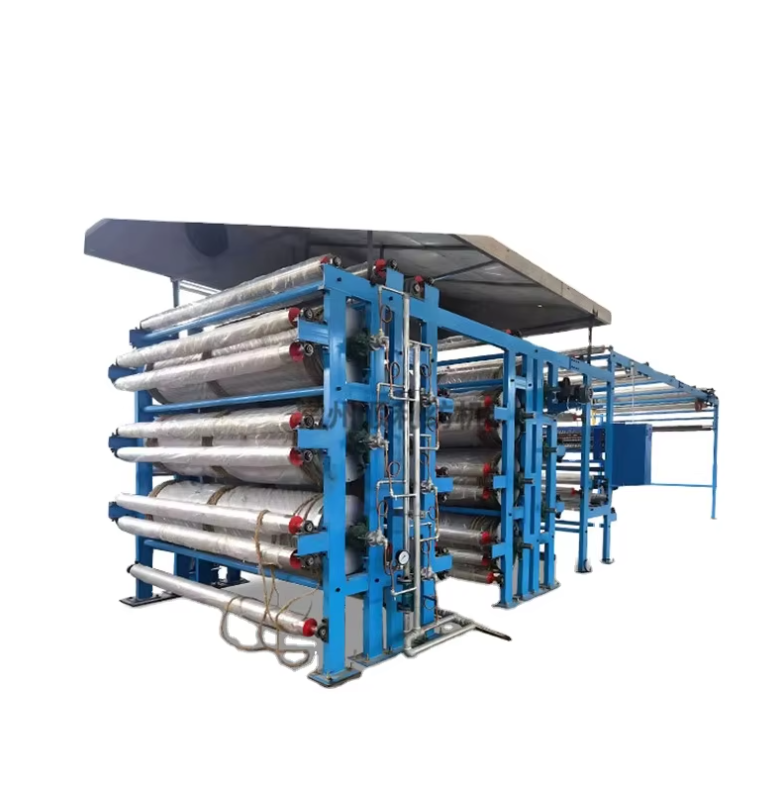
A cylinder dryer does not simply blow hot air. It transfers heat directly from steam pressurized metal shells into the wet fabric running across their surface. This conduction based heating is remarkably efficient, and it explains why cylinder dryers remain the workhorse of textile finishing even as radio frequency and infrared technologies have emerged. The physics is straightforward: saturated steam inside a rotating cylinder maintains a consistent shell temperature, and every square centimeter of contact time pulls moisture out of the fabric. A textile engineer who has commissioned finishing ranges across Southeast Asia noted that a well designed bank of cylinders can reduce the moisture content of a heavy cotton twill from seventy percent to below eight percent in less than twenty five meters of contact length. That speed directly determines the pace of the entire stentering and shrinking line. When a high performance cylinder runs at the right surface temperature, the fabric exits dry but not overdried, preserving the hand feel that buyers demand.
Consistent Heat Distribution for Uniform Quality
Stripes, shading and uneven shrinkage often trace back to temperature variation across the fabric width. If the dryer cylinder surface is hotter at the steam inlet end than at the condensate outlet end, the selvedge may dry faster than the center, and that differential will show up later as dye uptake variation or puckering. High performance cylinder dryers address this with internal designs that rapidly evacuate condensate. Syphon systems and properly sized steam joints keep the condensate film as thin as possible, which stops it from insulating the inner wall. Some modern cylinders also feature a special internal grooving that improves heat transfer and reduces the temperature drop from edge to edge. A quality manager at a cotton bed linen manufacturer explained that after upgrading to a cylinder dryer set with balanced condensate removal, the shade variation across a two meter wide fabric dropped from a half tone step to barely detectable on a spectrophotometer. Their re dyeing rate fell by over thirty percent in six months.
Engineering That Cuts Energy and Boosts Throughput
Steam is expensive, and a dryer that bleeds energy through poorly insulated end caps or sluggish condensate extraction is burning money. High performance cylinders incorporate insulation at the ends and use precision ground shells that maximize fabric wrap angle and contact time. A denim finishing plant facing rising natural gas prices decided to replace a set of older cylinder dryers with new high efficiency models. The plant recorded a seventeen percent drop in steam consumption per kilogram of fabric, and because the new cylinders ran at a more stable surface temperature, they were able to increase the line speed by twelve percent without compromising final moisture content. That one change paid for the new dryer bank in under fourteen months. From a technical standpoint, the energy savings come from several design elements working together: thin wall shells for faster heat transfer, optimized internal condensate removal that reduces the steam required, and end insulation that stops radiant losses. Textile engineering literature consistently highlights that cylinder drying consumes less energy per kilogram of water evaporated than hot air tenter drying, and closing the gap between theoretical and actual efficiency is what high performance designs do best.
Reliability That Keeps Lines Running
A cylinder dryer is a pressure vessel, and its safety and longevity depend on rigorous manufacturing standards. ASME Boiler and Pressure Vessel Code Section VIII or equivalent national standards govern the shell thickness, weld quality and hydrostatic testing. A dryer that leaks steam or develops a thin spot in the shell can force an unplanned shutdown that ripples through the entire finishing schedule. A maintenance manager at a wool processing mill mentioned that their previous cylinder dryers required weld repairs on steam joints every eight to ten months, and the plant lost several production days each year. After switching to a set of dryers built with certified pressure vessel quality steel and automated welding, the steam system ran leak free for over four years with only routine inspection. This reliability extends beyond the shell. Bearings designed for high temperature operation, self adjusting carbon ring seals and robust syphon tubes all contribute to a dryer bank that can run twenty four hours a day during peak season without nursing. When evaluating total cost of ownership, the price of a dryer looks very different after adding up the cost of lost production from an unreliable unit.
Adaptability for Today's Diverse Textile Mix
Textile mills no longer run a single fabric type for months. Today a finishing range might handle lightweight polyester voile in the morning and heavy coated upholstery fabric in the afternoon. High performance cylinder dryers meet this variety by offering a range of shell surface coatings. Polished chrome resists sticking for starched cotton fabrics, while PTFE coatings handle low melting point synthetics without picking. Temperature control across cylinder groups can be zoned, so the first cylinders preheat gently while later ones apply higher heat, preventing thermal shock on sensitive blends. A technical director at a home textile exporter noted that since they installed dryers with chrome plated cylinders for their all cotton range and a separate line with PTFE coated cylinders for their polyester microfiber range, fabric handle complaints dropped and the number of acceptable end breaks in the stenter feed increased measurably. The ability to configure cylinder material and surface finish according to the actual production mix is no longer a special request. It is expected.
Manufacturing Quality That Backs Every Dryer
A cylinder dryer is an investment measured in decades, not years. That means the choice of manufacturer is as important as the choice of specification. Schneiter builds every cylinder dryer on a foundation of heavy wall steel shells, precision balanced and tested to international pressure vessel standards. Their machining capability allows them to produce cylinders with a mirror finish or with tailored coating applications that match the exact chemistry of the customer's fabric range. Beyond the hardware, Schneiter organizes its supply chain and assembly workflow to deliver complete dryer banks on predictable lead times, along with the steam joint spares, syphon kits and technical documentation that maintenance teams need from day one. When a finishing line in South Asia ordered a set of high performance dryers from Schneiter, the commissioning support included on site training for the engineering staff on condensate optimization and routine inspection points. That kind of partnership ensures the energy efficiency and reliability promised on the specification sheet actually show up on the factory floor, and continue to show up after millions of meters of fabric have passed through.